Το ακριβότερο λάθος σε έναν λιπασματοδιανομέα είναι αόρατο: το μηχάνημα δουλεύει, οι δίσκοι γυρίζουν, το λίπασμα πετάγεται — και η δόση που πέφτει ανά εκτάριο απέχει 20% από τον στόχο. Το παραπάνω θάβει χρήματα στο έδαφος και θέτει σε κίνδυνο άζωτο που δεν απορροφάται· το λιγότερο κλέβει αθόρυβα από την απόδοση. Και σε αντίθεση με τον ψεκασμό, δεν βλέπετε αμέσως το αποτέλεσμα· η διαφορά φαίνεται μήνες αργότερα, στο χρώμα της καλλιέργειας.
Η σωστή δόση έχει τρία συστατικά: ροή (kg/min), ενεργό πλάτος εργασίας (m) και πραγματική ταχύτητα (km/h). Και τα τρία μετριούνται — ας τα πάρουμε με τη σειρά.
Γιατί ο πίνακας του κατασκευαστή δεν αρκεί
Οι πίνακες ρυθμίσεων των λιπασματοδιανομέων είναι φτιαγμένοι για συγκεκριμένη πυκνότητα και υγρασία λιπάσματος. Το λίπασμα στην αποθήκη σας διαφέρει σε μέγεθος κόκκου, υγρασία και μάρκα· το ίδιο άνοιγμα θυρίδας δίνει δύο διαφορετικές ροές με δύο διαφορετικά προϊόντα. Ο πίνακας είναι το σημείο εκκίνησης — ο πραγματικός αριθμός βγαίνει από τη ζυγαριά.
Βήμα 1 — Μάθετε το ενεργό πλάτος εργασίας
Σε έναν λιπασματοδιανομέα διπλού δίσκου, το λίπασμα πετάγεται σε ένα φαρδύ μοτίβο με αραιές άκρες. Γι' αυτό πλάτος εργασίας ≠ πλάτος ρίψης: η ομοιόμορφη κατανομή στηρίζεται στην επικάλυψη των γειτονικών περασμάτων στις άκρες του μοτίβου. Χρησιμοποιήστε το ενεργό πλάτος που δίνει ο κατασκευαστής για τον τύπο λιπάσματός σας· αν έχετε αμφιβολία, μια δοκιμή με δίσκους συλλογής (δοχεία απλωμένα κατά πλάτος του περάσματος) αποκαλύπτει μία φορά το πραγματικό σας μοτίβο — και κρίνει την ποιότητα κατανομής όλης της σεζόν.
Βήμα 2 — Η δοκιμή ζύγισης: μετρήστε τα kg/min
Η βαθμονόμηση του λιπασματοδιανομέα στηρίζεται σε μια μέτρηση τόσο απλή όσο η δοκιμή με τον κουβά στο ψεκαστικό:
- Αποσυμπλέξτε τους δίσκους ή εκτρέψτε τη ροή σε δοχείο συλλογής (με το κανάλι/κιτ βαθμονόμησης του μοντέλου σας)
- Αφήστε το να δουλέψει ακριβώς 1 λεπτό στο άνοιγμα της εφαρμογής
- Ζυγίστε ό,τι βγήκε → αυτά είναι τα kg/min σας
Επαναλάβετε τη μέτρηση κάθε φορά που αλλάζει η παρτίδα λιπάσματος — η ίδια ρύθμιση δίνει διαφορετική ροή σε διαφορετική υγρασία.
Βήμα 3 — Μετρήστε την πραγματική σας ταχύτητα
Η δόση του λιπασματοδιανομέα είναι δεμένη ένα προς ένα με την ταχύτητα: πηγαίνετε 10% πιο γρήγορα και ρίχνετε 10% λιγότερο ανά εκτάριο. Εμπιστευτείτε τη μέτρηση, όχι το κοντέρ του τρακτέρ — το GPS Ταχύμετρο δείχνει την αληθινή ταχύτητα στο κινητό σας.
Βήμα 4 — Μετατρέψτε τον στόχο σε αριθμό
Απαιτούμενη ροή (kg/min) = Στόχος (kg/ha) × Ταχύτητα (km/h) × Πλάτος εργασίας (m) ÷ 600
Παράδειγμα: στόχος 250 kg/ha στα 10 km/h με ενεργό πλάτος 18 m → 250 × 10 × 18 ÷ 600 = 75 kg/min. Αν η δοκιμή ζύγισης βγει αισθητά πάνω ή κάτω από τα 75, ρυθμίστε το άνοιγμα και επαναλάβετε.
Βήμα 5 — Επαληθεύστε στο χωράφι
Ο πιο τίμιος έλεγχος είναι το ίδιο το χωράφι: λίπασμα που χρειάζεται ≈ έκταση (ha) × στόχος (kg/ha). Για 20 εκτάρια στα 250 kg/ha πρέπει να καταναλωθούν 5.000 kg. Αν η χοάνη αδειάζει εμφανώς νωρίτερα ή περισσεύει λίπασμα, κοιτάξτε τους τρεις υπόπτους: σήμα ταχύτητας, πλάτος εργασίας, βαθμονόμηση ροής. Οι διαδρομές για λιπάσματα στον οδηγό Nova Support σας περνούν από αυτόν τον αποκλεισμό βήμα προς βήμα.
Για να σχεδιάσετε πόσο λίπασμα χρειάζεστε ανά θρεπτικό στοιχείο, έχετε πρόχειρο τον Υπολογιστή λιπασμάτων.
Από τη χειροκίνητη ρύθμιση στον αυτόματο έλεγχο δόσης
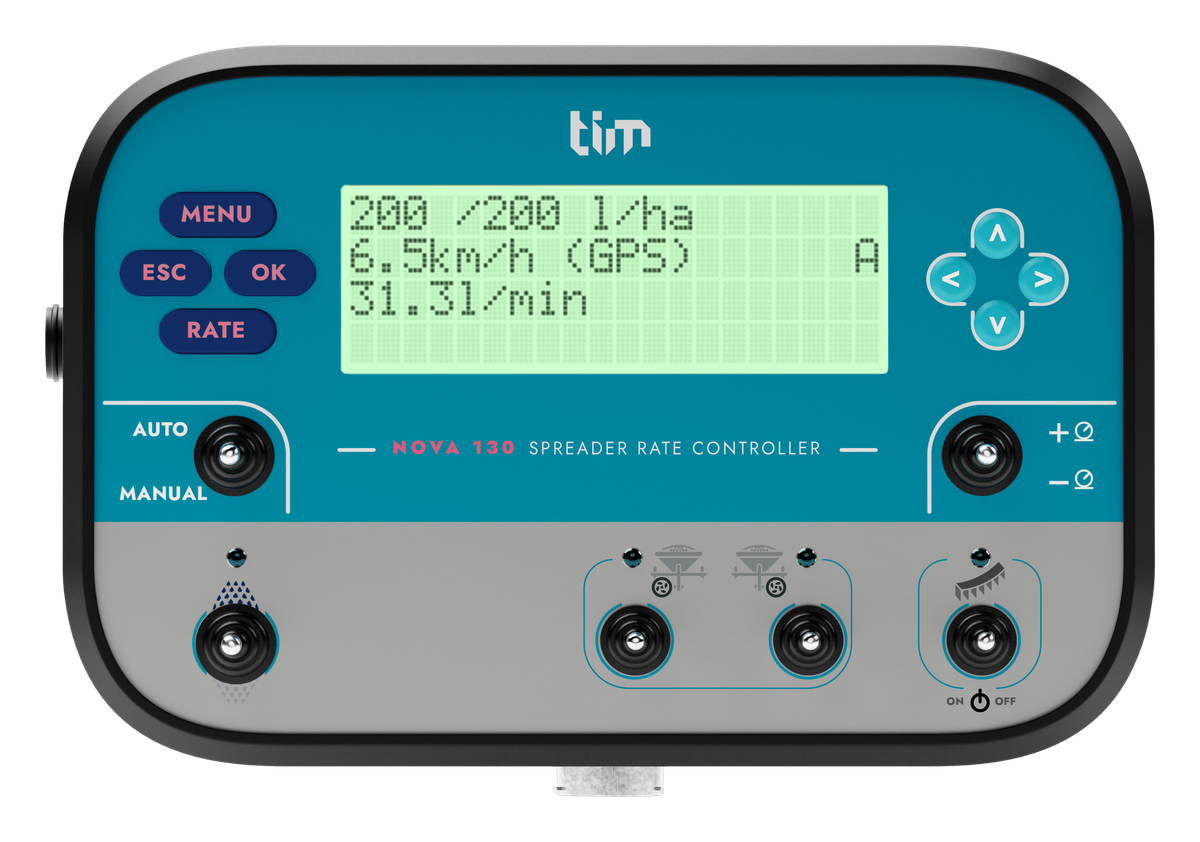
Όλα τα παραπάνω προϋποθέτουν σταθερή ταχύτητα — όμως στο χωράφι η ταχύτητα αλλάζει, και σε έναν συμβατικό λιπασματοδιανομέα η δόση ακολουθεί. Ο έλεγχος μεταβλητής δόσης κλείνει αυτό το κενό: διαβάζει συνεχώς την ταχύτητα, ρυθμίζει τη ροή επιτόπου και κρατά τα kg/ha σταθερά σε όλο το πέρασμα. Η συσκευή μας ακριβώς γι' αυτή τη δουλειά στους λιπασματοδιανομείς είναι το Nova 130 — με βαθμονόμηση μέσω ζύγισης και υποστήριξη διπλού δίσκου, έρχεται σύντομα. Παρακολουθείτε τη σελίδα του προϊόντος για την κυκλοφορία.
Συχνές ερωτήσεις
Πρέπει να επαναλαμβάνω τη δοκιμή ζύγισης για κάθε λίπασμα;
Αν άλλαξε η παρτίδα, η μάρκα ή η υγρασία — ναι. Το ίδιο άνοιγμα θυρίδας δίνει πολύ διαφορετική ροή με υγρό και με στεγνό προϊόν.
Δεν μπορώ να μεγαλώσω το πλάτος εργασίας και να κάνω λιγότερα περάσματα;
Οι άκρες του μοτίβου είναι αραιές· αν υπερβάλετε στο πλάτος, δημιουργείτε λωρίδες με υπολίπανση (που φαίνονται αργότερα ως κυματιστές ζώνες χρώματος στην καλλιέργεια).
Τι γίνεται στα όρια του χωραφιού;
Χρησιμοποιήστε τη ρύθμιση λίπανσης ορίων ή τον εκτροπέα για να κόψετε τη ρίψη από την πλευρά του ορίου — λίπασμα που πέφτει στο χωράφι του γείτονα ή σε κανάλια νερού είναι και απώλεια και ευθύνη.
Για μέτρηση ταχύτητας και σχεδιασμό θρεπτικών στοιχείων, το GPS Ταχύμετρο και ο Υπολογιστής λιπασμάτων βρίσκονται στο Κέντρο Αγρού — δωρεάν, χωρίς εγγραφή.